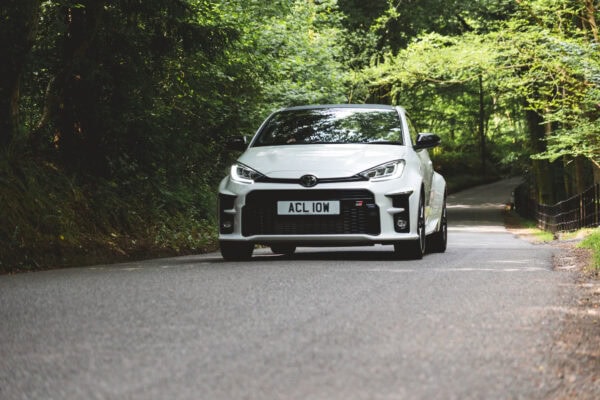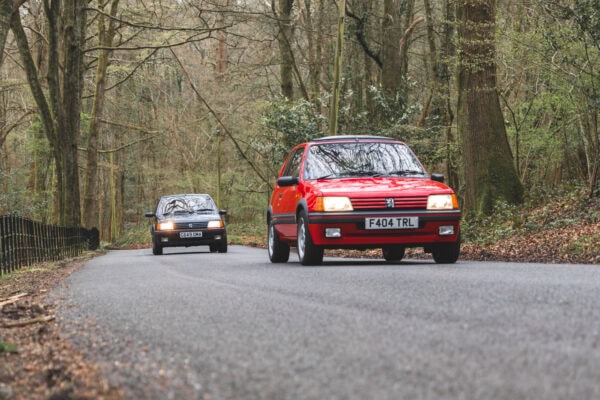



The Yaris GR Four | The Peugeot 205 GTI Of Our Time?
It’s easy to draw comparisons between the old and the new. The MX-5 and the Lotus Elan. The Alpine A110 and the Alfa Romeo Giulia 2000. Different eras, different technology, different manufacturers, but the same basic recipe.
But we’re not here to talk about those.
We’re here to talk about the natural successor to a car that is very dear to me.
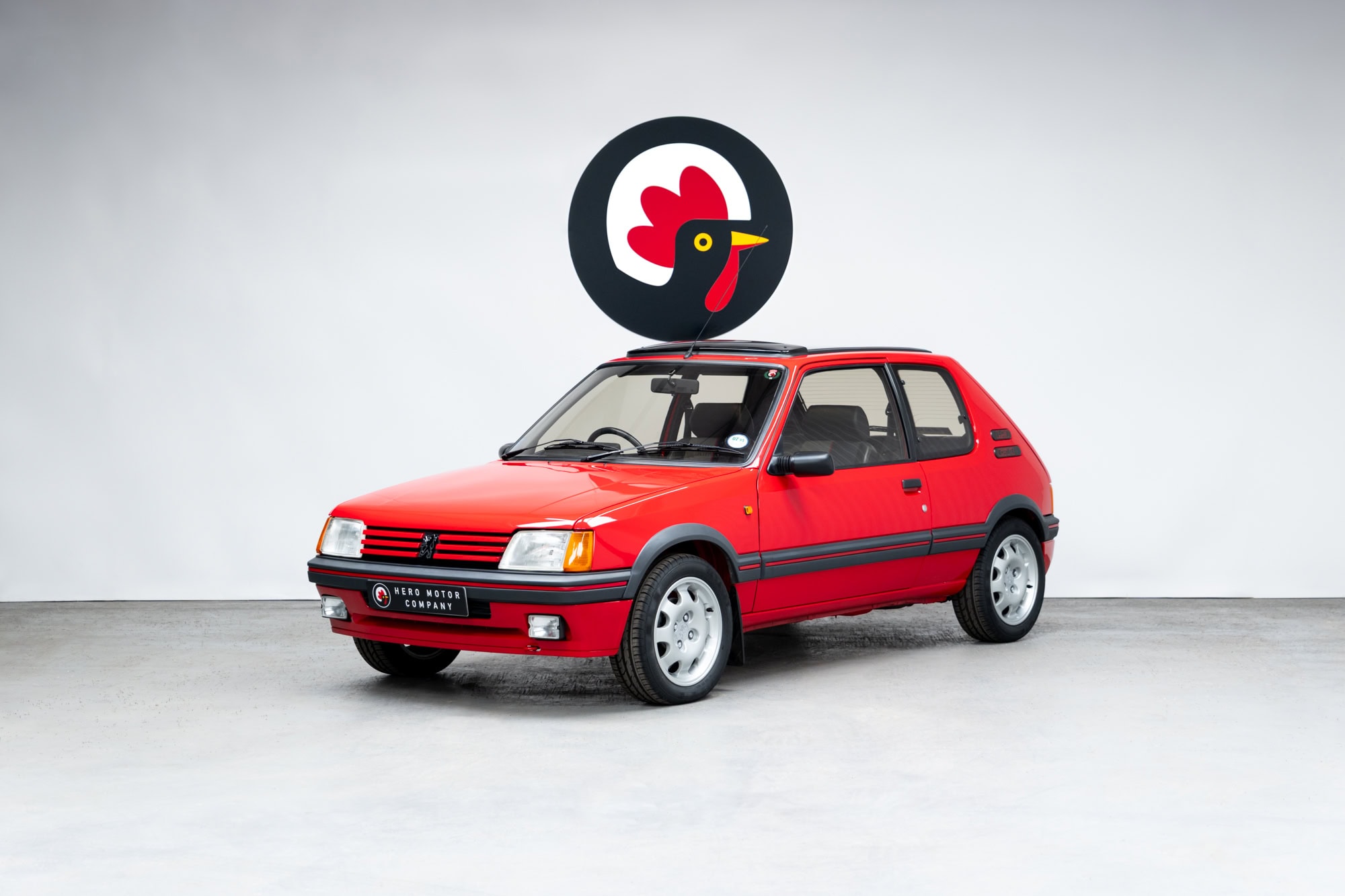
The Peugeot 205 GTI.
I’ve driven dozens over the last twenty years. I still love them. Even now, with their rattles, their questionable plastics and the ever-present suspicion that something hard to replace is about to fall off, I still love them.
They are tremendously easy to live with. Like a toaster. Occasionally, your nose tells you that something’s wrong.
Because they’re basic.
Wheels. Doors. Radio (if you’re lucky). Engine… (again, if you’re lucky).
The rest is down to you.
And that, more than anything, is what made the 205 so good. It was a small, ordinary hatchback with a sassy attitude and a bit of acceleration. There was very little between you and the road, and consequently very little between you and the consequences of indulging your inner yob.
So what made it a cult classic?
Well, pretty much everything you wanted from a hot hatch. It looked fantastic, it was small and light, it handled brilliantly and it was just about attainable by normal people. The 1.6 had 105bhp when it launched, later rising to 115bhp, while the 1.9 brought 128bhp and disc brakes all round. On paper, these numbers look almost comical now. But they offered a slice of performance that had previously only been available to much more powerful cars.
And because they were cheap, people actually used them. They modified them, ruined them, engine-swapped them, raced them and sold them on to someone even less responsible. This wasn't some precious automotive icon at the time. It was a fast little Peugeot, and we treated it accordingly.
That, I think, is the secret.
The 205 GTI became a cult classic because it was never supposed to be one, and as a result, every enthusiast over 30 has a story about a Peugeot 205.
I had a Yaris too. I have absolutely no stories about that. because it was dull as dishwater.
Obviously, it wasn't a GR Four.
Mine was the sort of Yaris that exists primarily to remind you that other cars are available. I bought it because my 205 was, once again, in pieces, and Toyota was offering 0% finance on three-year-old cars to a man who needed something reliable.
By Monday.
It was utterly forgettable. Despite being the 1.3-litre ‘Sport’. The brakes were binary, the steering was like arguing with a mime artist and the so-called ‘sports seats’ had as much contouring as a marble floor.
Lucky for us, Toyota opened a can of wasabi sauce and spent an evening indulging the underground punk spirit that can only be found buried deep beneath the polite exterior of Japanese culture.
As the karaoke bar started flicking the lights on and off, stacking chairs on the tables, we find our engineers. Ties around their heads and hangovers waiting respectfully, there existed, scribbled on a napkin, the GR Four.
Now, manufacturers making 4WD versions of their hatchbacks is nothing new. Ford’s Focus RS, the Volkswagen Beetle RSR, and even the MK2 Golf Rallye. But those examples were either overkill, unobtainium or, well, a Beetle.
I’d rather commute on a space-hopper.
The GR Four, however, really got it right.
Because underneath all the bulging arches, four-wheel drive, carbon roof, forged wheels and frugal three-cylinder turbocharged engine, it is still a Yaris.
Hence why it’s missing a cylinder.
Toyota took the sensible little sensory deprivation box and decided it should be raised in the wild, capable of embarrassing things costing twice as much.
The GR was developed by Toyota Gazoo Racing as a homologation special and built at the Motomachi factory responsible for the Lexus LFA. It got a 1.6-litre turbocharged three-cylinder making 257bhp, a six-speed manual gearbox and a bespoke 4WD system capable of varying its torque distribution between the two axles.
In other words, somebody at Toyota looked at the Yaris and thought:
“Yes. That. But make it good in Wales.”
So they did.
But there is one rather large problem with calling it the 205 of our time. There simply aren’t enough of them.
The 205 GTI became a cultural phenomenon partly because it was accessible. It got into the hands of teenagers, twenty-somethings, boy racers, petrolheads and people who had absolutely no business being trusted with a fast car. They became cheap enough to be disposable, and consequently everybody had one, knew someone who had one, or had a story about one.
The GR is unlikely to get that chance. It was too specialised, too expensive and too limited in number. It might replicate the 205’s performance, attitude and sheer ability, but it will never become the car that an entire generation remembers owning.
In that respect, perhaps the better comparison is the homologation special 205, the T16.
Both are extraordinary little 4WD Toyotas and Peugeots respectively, engineered far beyond what their humble body shells would suggest. Both are born from motorsport and both demonstrate just how far you can push a small hatchback when someone at the manufacturer feels the urge to kick Monday off with a splash.
But the T16 was never the car every young petrolhead could afford. It was the exotic one. The poster car. The one you knew existed, but didn’t have any realistic prospect of owning, or even seeing in the flesh outside of competition.
And that may ultimately be the Yaris GR’s fate, to a certain degree. They're out there, and they can be had.
There was a time, following the release of the mighty GR, when Toyota introduced 0% APR finance. Can you imagine?
Free money.
In exchange for what will go down as being the best hot hatch of the 2020s.
I think it’s certainly unlikely that we’re going to encounter anything that rivals it without needing to plug it in.
The 1.9 205 GTI, was a whopping nine grand in 1988, and within a decade, saw prices hit rock bottom, to the tune of being able to pick one up for £900 in the early 2000's.
They have since skyrocketed, but (unlike the 205) values of the GR have remained stable. Good examples still command north of £30k, while even leggy examples can be found nearer £20k. For goodness sake, they were only £35k for a fully loaded one to start with!
Our general consensus here is that, if you’re not a garage-queen collector, even the leggy example might be a good buy if that works with your budget.
After all, it is a Toyota.
If it were my dollar and I was torn between a classic yet slightly finicky 205 GTI and a usable, RELIABLE, 4WD hot hatch from Toyota, well, that’s a very tough decision.
And against my longstanding loyalty to the 205, I think I would be shaking hands beside the Yaris.
For the simple reason that, for me, a £30,000 car is still a car first and foremost, and a prospective investment second.
It’s not a small amount of money, but if you’re a driver first and foremost, then don’t wait for history to decide what this car is worth and enjoy it while it’s still a car.
– Callum